
 Photo Gallery
 Table of Contents
So what is a lichen, anyhow? Good question.
To most lichenologists – the people who study lichens – lichens are essentially the outward face of an enduring partnership between two or more unrelated organisms: a fungus on the one hand, and algae or cyanobacteria (or both) on the other.
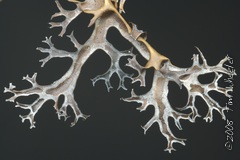
Masonhalea richardsonii
The body of a lichen is called a thallus. The greater part of most (but not all) lichen thalli consists of fungi: Earth’s first weavers. Viewed close up, fungi consist of hyphae: tiny white “threads” – inverted thread-like intestines might be a better description – that grow by absorbing nutrients from their immediate environment. The hyphae of unlichenized fungi weave a kind of living internet within their host, be it soil, logs, dead fish, or humans (e.g., ringworm). In some ecosystems fungal hyphae function as miniature straws, passing nutrients around not only within the fungus itself, but also from one species of tree, say, to another. Think of them as the “lines of communication” that hold certain ecosystem together, make it work.
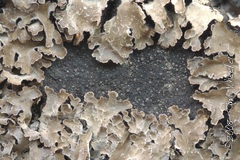
Parmelia omphalodes
Admittedly these are still early days for our website. Even so, there’s already plenty here to occupy you awhile, maybe challenge some old ideas. Do be welcome.


